IPTV Restreaming Explained: Servers, Costs and Legal Checks
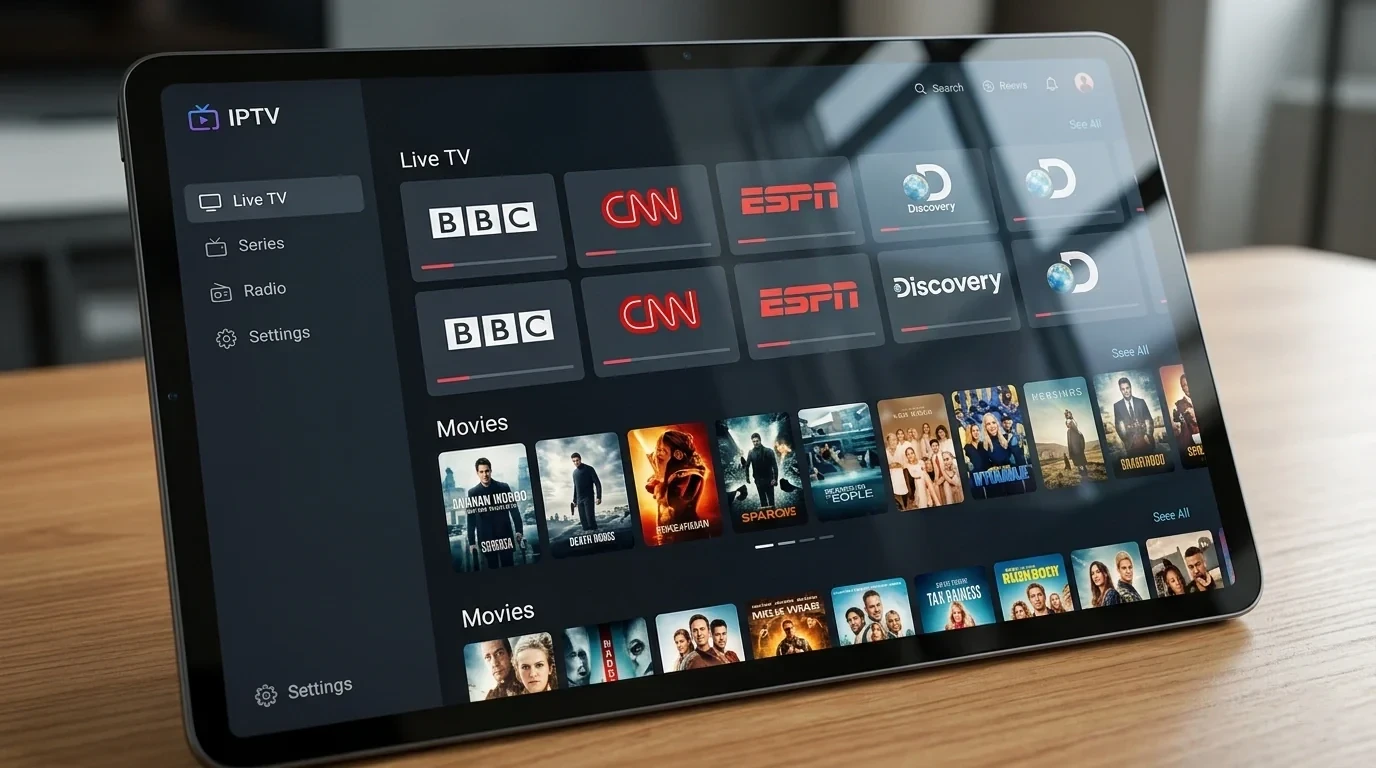
Behind every modern digital television deployment lies a sophisticated server pipeline designed to ingest, process, and distribute high-definition live video feeds over the internet. While consumer streaming apps make watching live TV look as simple as opening a channel guide, the underlying infrastructure relies on complex networking protocols, real-time video encoding, edge delivery networks, and legal compliance frameworks.
Understanding IPTV restreaming—the process of receiving a live video feed from an authorized source and redistributing it across a separate distribution network—is essential for OTT operators, IPTV resellers, technical engineers, and business leaders evaluating digital media infrastructure in 2026.
In this technical guide, we break down how IPTV restreaming pipelines operate, analyze hardware requirements (CPU vs. GPU), model bandwidth and infrastructure costs, explore scaling strategies, and detail the critical legal and licensing checks required for legitimate content distribution.
Quick Answer: What Is IPTV Restreaming?
IPTV restreaming means taking an authorized live video source feed, processing or re-encoding it when necessary, and delivering that video stream to a new group of viewers through a custom streaming distribution architecture.
At a high level, a complete restreaming pipeline follows this sequence:
CONTENT SOURCE -> INGEST (HLS / SRT / MPEG-TS) -> ENCODING / TRANSCODING -> ORIGIN SERVER -> CDN / EDGE DELIVERY -> AUTHENTICATION & TOKEN CONTROL -> IPTV PLAYER APP -> END VIEWER
Not every deployment requires every architectural layer. Small localized setups may combine origin processing and delivery onto single servers, whereas large-scale global networks utilize multi-region origin clusters paired with tier-1 Content Delivery Networks (CDNs).
IPTV Streaming vs IPTV Restreaming
To understand restreaming, it is helpful to contrast direct streaming with restreaming technology:
IPTV Streaming
A content owner or primary broadcaster encodes live video directly at the stadium or broadcast studio and streams it straight to end consumers via proprietary applications.
IPTV Restreaming
A secondary distributor receives an existing broadcast feed from a primary source, passes it through an intermediate ingest and processing pipeline, and redistributes it to an independent audience.
| Feature | IPTV Streaming | IPTV Restreaming |
|---|---|---|
| Video Source | Primary studio feed / camera source | Authorized broadcast feed or contribution stream |
| Video Processing | Initial master encoding | Transcoding, profile switching, container repackaging |
| Delivery Network | Direct broadcast CDN | Secondary origin and edge redistribution network |
| Main Infrastructure Challenge | Master feed capture & encoding | Stream ingestion stability, scaling & bandwidth |
| Primary Legal Requirement | Broadcast creation & primary rights | Redistribution licenses & territorial agreements |
(Note: Restreaming is a neutral technical mechanism. The legality of restreaming depends strictly on whether the operator holds written authorization and distribution licenses for the content being transmitted.)
How Does IPTV Restreaming Work?
A professional IPTV restreaming pipeline operates through eight distinct sequential steps:
Step 1: Content Source Acquisition
The operator receives an authorized live video feed. Legitimate sources include licensed satellite contribution feeds, authorized IP transport channels, public-domain broadcasts, or proprietary production signals.
Step 2: Stream Ingest
The incoming signal enters the origin server using high-reliability transport protocols such as SRT (Secure Reliable Transport), MPEG-TS over UDP/RTP, RTMP, or HLS (HTTP Live Streaming).
Step 3: Transcoding & Bitrate Adaptation
If the incoming source is too large or encoded in an incompatible format, hardware transcoder units convert the video into multiple resolutions (e.g., 1080p60, 720p30, 480p) and codecs (H.264 / HEVC / AV1).
Step 4: Stream Packaging
The transcoded video frames are sliced into small time segments (typically 2 to 6 seconds) and packaged into distribution formats like HLS (.m3u8 manifests + .ts / .fmp4 segments) or MPEG-DASH.
Step 5: Origin Server Management
The origin server stores active stream manifests, manages live session buffers, and responds to incoming chunk requests from edge distribution nodes.
Step 6: CDN Distribution
To prevent the origin server from collapsing under heavy traffic, a Content Delivery Network (CDN) caches video segments at edge servers located physically close to end users.
Step 7: Authentication & Access Control
When a user clicks play in their IPTV app, the system validates their active subscription, verifies their IP address, and issues a temporary time-bound security token.
Step 8: Playback
The user's device (Smart TV, Firestick, or mobile phone) decodes the HLS/DASH segments and displays the live broadcast with low latency.
Learn more about live TV delivery infrastructure in our guide on how BexyTV works.
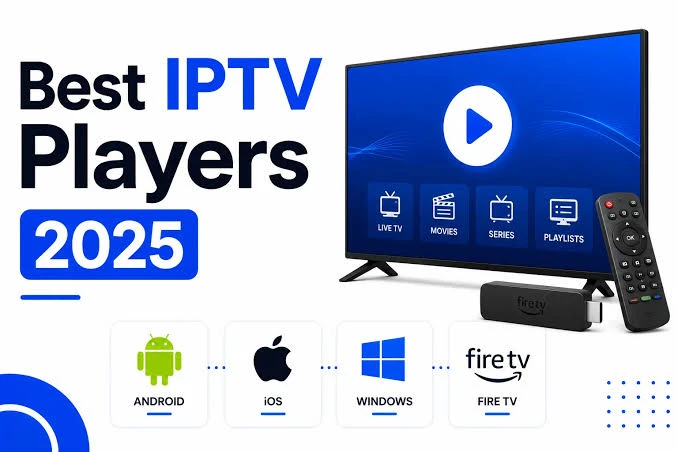 IPTV restreaming servers and stream ingest
What Is an IPTV Restreaming Server?
An IPTV restreaming server is a high-performance physical or virtual server configured to handle video ingestion, session management, transrating, and stream distribution.
Core Responsibilities of a Restreaming Server:
- Ingest Manager: Maintains continuous connection with incoming stream sources.
- Transcoder Engine: Processes real-time video encoding and profile creation.
- Middleware Panel: Manages subscriber playlists, EPG mapping, and billing integration.
- Load Balancer: Distributes viewer requests across secondary edge nodes.
- Stream Guard: Enforces connection concurrency limits and blocks unauthorized hotlinking.
Hardware requirements vary significantly based on channel volume, concurrent viewers, resolution, and whether hardware video encoding (GPU/NPU) is utilized.
Do IPTV Restreaming Servers Need CPU or GPU Power?
Selecting between CPU-based software encoding and GPU-accelerated hardware encoding is one of the most critical decisions when building IPTV infrastructure:
Central Processing Unit (CPU)
- Strengths: Excellent for general application logic, database management, API endpoints, load balancing, and pure software encoding (such as x264/x265).
- Limitations: Software video transcoding on CPU is extremely compute-intensive. A high-end 64-core CPU may only transcode 15 to 20 Full HD streams simultaneously before reaching 100% utilization.
Graphics Processing Unit (GPU)
- Strengths: Hardware ASICs (such as Nvidia NVENC or Intel QuickSync) excel at parallel video decoding and encoding. A single modern GPU card can transcode 40 to 80+ simultaneous 1080p60 HEVC streams with minimal host CPU load.
- Limitations: Requires specialized driver integration, compatible media server software (FFmpeg / Xtream UI / Nimble Streamer), and higher upfront hardware investment.
How Much Bandwidth Does IPTV Restreaming Need?
Bandwidth is frequently the single largest recurring operational expense in live video streaming. Total bandwidth requirements are governed by a fundamental formula:
Total Bandwidth = (Number of Concurrent Viewers) × (Average Stream Bitrate) × (1 + Network Overhead Ratio)
Practical Bandwidth Calculation Example:
Consider a restreaming platform serving 500 concurrent viewers watching a 1080p 60 FPS channel encoded at a bitrate of 6 Mbps:
- Raw Data Rate: 500 viewers × 6 Mbps = 3,000 Mbps (3.0 Gbps)
- Protocol Overhead (10%): 3,000 Mbps × 1.10 = 3,300 Mbps (3.3 Gbps)
To deliver this traffic without packet drop or buffering, the host network infrastructure must provide at least 5.0 Gbps of dedicated unmetered outbound bandwidth to accommodate traffic spikes.
What Are Concurrent IPTV Connections?
A common point of confusion for new operators is the difference between total registered subscribers and concurrent connections:
- Total Subscribers: The cumulative count of active user accounts in the database (e.g., 10,000 users).
- Active Users: Subscribers who log into the application on a given day.
- Concurrent Connections: The exact number of device sessions actively requesting video chunks at the exact same second (e.g., 800 users during a Sunday afternoon sports match).
- Peak Concurrency: The maximum simultaneous viewer load experienced during major live events (often 30% to 50% of the total subscriber base).
Infrastructure must always be scaled according to peak concurrent connections, rather than total subscriber counts.
 IPTV restreaming infrastructure and CDN distribution
Why Use a CDN for IPTV Restreaming?
Attempting to serve thousands of concurrent viewers directly from a single origin server creates severe bottlenecks in network throughput, CPU interrupts, and geographic latency.
Key Benefits of CDN Integration:
- Origin Offloading: The origin server only transmits one master copy of each stream segment to each CDN edge POP (Point of Presence).
- Reduced Latency: Viewers download video chunks from local edge data centers located milliseconds away.
- DDoS Protection: Enterprise CDNs absorb traffic surges and malicious distributed denial-of-service attacks.
What Is IPTV Transcoding?
Transcoding is the process of taking an existing digital video stream, decoding it back into uncompressed raw frames, and re-encoding it into a different resolution, bitrate, or format.
Common Transcoding Use Cases:
- Resolution Downscaling: Converting a 4K 20 Mbps source feed into 1080p, 720p, and 480p profiles for Adaptive Bitrate (ABR) streaming.
- Codec Modernization: Transcoding legacy MPEG-2 satellite feeds into modern H.264 or H.265 (HEVC) streams to reduce bandwidth consumption by up to 50%.
- Audio Recoding: Converting AC3 or DTS multi-channel surround audio into AAC stereo for universal mobile browser playback.
Does IPTV Restreaming Require Large Storage?
In standard live TV restreaming, video segments are generated in real-time, buffered in RAM or fast NVMe storage for 30 to 60 seconds, and immediately overwritten. Consequently, pure live restreaming requires minimal permanent storage (often under 100 GB).
However, high-capacity storage becomes mandatory if your service offers:
- Catch-Up TV / Timeshift: Storing 7-day rolling recordings of live channel programming.
- Cloud DVR: Saving user-requested program recordings.
- Video on Demand (VOD): Hosting thousands of high-definition movie and TV show files.
How Much Does IPTV Restreaming Cost?
Restreaming infrastructure costs vary widely based on scale, redundancy, geographical distribution, and licensing status. Below is an educational cost breakdown for a mid-sized legal distribution setup:
| Cost Category | Key Purpose | Estimated Monthly Cost Range (USD) |
|---|---|---|
| Ingest & Origin Servers | Stream ingest, packaging, & panel software | $300 - $1,500 |
| Transcoding Hardware / GPU | Multi-profile hardware encoding cards | $500 - $3,000 |
| Dedicated Outbound Bandwidth | 10Gbps - 40Gbps unmetered network ports | $800 - $4,000 |
| CDN Traffic Distribution | Global edge video delivery per TB | $1,000 - $8,000+ |
| Middleware & Billing Panel | Account access & security tokens | $100 - $500 |
| Content Licensing Fees | Authorized broadcast distribution rights | Varies by agreement ($1,000s - $100,000s) |
| 24/7 Monitoring & Support | System administration & uptime engineering | $500 - $2,500 |
(Note: Pricing fluctuates based on data center locations, bandwidth transit contracts, and content rights agreements.)
Premium BexyTV 4K Streaming — Save 61% Today
Unlock 50,000+ channels, 150,000+ VODs, and 60 FPS Anti-Freeze technology. Get our 12-Month Plan for just $69.99.
- Premium Anti-Freeze v2
- Instant WhatsApp Activation
Small IPTV Restream vs Large IPTV Platform
| Platform Metric | Small / Local Deployment | Enterprise Global Platform |
|---|---|---|
| Channel Count | 50 - 200 channels | 5,000 - 50,000+ channels |
| Concurrent Viewers | 50 - 500 users | 10,000 - 100,000+ users |
| Server Architecture | Single origin + 1 backup server | Multi-region origin cluster + Tier-1 CDN |
| Transcoding | Selective 720p downscaling | Full ABR (4K, 1080p, 720p, 480p) via GPU |
| Redundancy | Manual failover | Automated multi-CDN failover & load balancing |
| Monitoring | Basic ping & port monitoring | Automated AI stream health & synthetic probing |
Explore our available IPTV subscription plans to examine enterprise consumer package features.
What Makes an IPTV Restream Reliable?
Achieving 99.99% uptime for live television demands systematic engineering across every layer of the delivery chain:
- Dual Redundant Source Feeds: Maintaining primary and secondary ingest sources for every channel.
- Automated Source Failover: Software that instantly switches to the secondary feed if the primary signal drops frame rates.
- Sufficient Bandwidth Headroom: Operating networks at no more than 60% average capacity to absorb unexpected viewer surges.
- Hardware Health Probing: Real-time monitoring of CPU temperature, GPU VRAM usage, and NVMe I/O bottlenecks.
- Accurate EPG Synchronization: Ensuring guide data correctly matches channel stream schedules.
Why Live Sports Are Harder to Restream
Streaming live sports presents technical challenges far greater than standard linear television or on-demand movies:
- Massive Traffic Spikes: Viewers log in within a 5-minute window right before kickoff, creating massive concurrency spikes.
- High Motion Bitrate Demands: Fast-moving camera pans during football or hockey require 60 FPS frame rates and elevated bitrates to prevent macroblocking.
- Zero Latency Tolerance: Viewers expect real-time action; a 60-second delay means neighbors might spoil a touchdown before it appears on screen.
Is IPTV Restreaming Legal?
The underlying technology of IPTV restreaming is completely legal. Corporations, educational institutions, government agencies, and legitimate broadcast networks utilize restreaming technology daily to distribute video feeds across internal and public networks.
The legal issue is content rights authorization.
Authorized vs. Unauthorized Restreaming:
- Authorized Restreaming: An operator secures written distribution agreements, rebroadcast licenses, or public-domain rights from the content owner. (Examples: Cable operators rebroadcasting local networks, authorized OTT aggregators).
- Unauthorized Restreaming: Rebroadcasting copyrighted television channels, movie streams, or live sports broadcasts without explicit licensing consent from copyright holders.
Regulatory agencies globally, including the European Commission and the U.S. Department of Justice, actively enforce copyright compliance against unauthorized redistribution operations.
 IPTV restreaming legal checks and content rights
What Legal Checks Should an IPTV Restreamer Make?
Before distributing any video stream, operators should complete a thorough legal compliance checklist:
- Verify Content Ownership: Confirm who holds the primary copyright for the broadcast.
- Secure Written Distribution Licensing: Obtain signed distribution contracts explicitly permitting digital retransmission.
- Define Geographic Territory: Ensure distribution rights cover the exact country or region where your viewers reside.
- Verify Platform Rights: Check whether rights permit streaming on mobile apps, Smart TVs, and web players.
- Separate Live vs. VOD Rights: Confirm whether catch-up TV and VOD storage are authorized under the contract.
- Review Sports Retransmission Rules: Verify specific league blackout and exclusive window requirements.
- Maintain Archival Documentation: Retain copies of all licensing documentation for audit compliance.
Why Sports Rights Need Extra Attention
Sports broadcasting rights are among the most valuable and heavily protected intellectual properties in the world. Leagues like the NFL, NBA, MLB, and Premier League partition rights across complex regional, national, and international windows.
A license to broadcast a game in one country does not grant rights to stream that game globally. Always consult specialized media legal counsel before distributing live sports content.
Red Flags When Evaluating an IPTV Restream Provider
If you are researching IPTV services or infrastructure partners, be cautious of providers that exhibit these red flags:
- Zero Licensing Information: Inability to provide proof of legal distribution authorization.
- Impossible "Every Channel Worldwide" Claims: Claiming to hold legitimate rights to every broadcast network globally for a single low price.
- No Physical Business Address: Lack of transparent corporate governance, terms of service, or clear ownership details.
- Anonymous Payment Only: Accepting only unverified, non-reversible payment methods.
- Unstable Server Infrastructure: Frequent channel outages, unmapped EPG guides, and missing customer support.
How to Choose an IPTV Restreaming Provider
When selecting a commercial live TV provider or evaluating distribution infrastructure, utilize this 10-step criteria:
- Verify Authorization: Ensure content feeds are legally licensed.
- Test Stream Stability: Request a trial to evaluate stream uptime and frame rates.
- Inspect EPG Accuracy: Verify that electronic program guide schedules update correctly.
- Evaluate Multi-Device Support: Confirm app compatibility across Firestick, Smart TV, and mobile hardware via our IPTV installation guide.
- Check Bandwidth Capacity: Ensure servers handle peak traffic without buffering.
- Review Security Protocols: Confirm tokenized stream encryption and anti-hotlinking protections.
- Examine Customer Support: Test responsiveness of technical support channels.
- Clarify Connection Limits: Ensure concurrent connection rules match your subscription.
- Check Pricing Transparency: Avoid hidden fees or non-refundable multi-year contracts.
- Test Peak-Hour Performance: Test playback quality during high-profile Sunday sports events.
Learn more about available channel packages on our IPTV channel list.
How BexyTV Fits Into the IPTV Ecosystem
At BexyTV, we operate strictly as a premium consumer-facing live TV streaming provider. We deliver high-definition live television channels, movies, and series directly to end users through compatible IPTV player software on Smart TVs, Firesticks, and Android devices.
What BexyTV Delivers to Viewers:
- 50,000+ High-Definition Live Channels: Complete access to entertainment, news, and sports networks.
- 150,000+ VOD Titles: On-demand access to movies and complete television series.
- Anti-Freeze v2 Server Technology: High-capacity server routing designed to eliminate buffering.
- Full Compatibility: Works with top player apps like TiviMate, IPTV Smarters, and XCIPTV.
(Note: BexyTV provides consumer live TV subscription services. We do not sell raw restreaming panel feeds or unmanaged server infrastructure.)
Explore our flexible plans on our pricing page or read IPTV FAQ for detailed service information.
Security Considerations for IPTV Restreaming
Securing streaming infrastructure against unauthorized access, bandwidth theft, and hotlinking is paramount:
- Tokenized HLS URLs: Generating unique, time-expiring session tokens for every video chunk request.
- IP & User-Agent Locking: Restricting stream playback to the validated IP address of the authorized subscriber.
- Geo-Blocking Rules: Restricting stream access to permitted geographic territories to comply with licensing agreements.
- Concurrency Rate Limiting: Automatically terminating secondary stream attempts if an account exceeds its allowed connection limit.
How IPTV Restreaming Infrastructure Is Monitored
High-availability streaming operations employ automated monitoring tools to track system metrics in real time:
- Stream Health Probers: Automated headless instances that continuously sample stream bitrates, audio sync, and segment download times.
- Bandwidth Utilization Telemetry: Real-time dashboards tracking outbound traffic across origin and edge interfaces.
- Error Rate Metrics: Alerts triggered if HTTP 404 (chunk missing) or 503 (server overloaded) rates exceed 0.1%.
- CPU / GPU Load Alerts: Instant notifications if transcoders approach thermal or processing thresholds.
Common IPTV Restreaming Problems
| Symptom | Probable Technical Cause | Recommended Solution |
|---|---|---|
| Frequent Stream Buffering | Insufficient outbound bandwidth or ISP throttling | Scale edge CDN capacity; optimize player buffer settings |
| Black Screen / Infinite Spinner | Ingest source offline or dead manifest link | Restart ingest daemon; switch to secondary backup feed |
| Audio Out of Sync | Transcoder frame dropping or improper PTS timestamps | Re-index source timestamps; adjust audio offset in player |
| High CPU / Server Freeze | Software encoding overload | Offload transcoding workloads to dedicated GPU hardware |
| Connection Limit Errors | Account credential sharing or token leak | Enable IP-locking and short-lived HLS security tokens |
For consumer playback troubleshooting, visit our guide on resolving IPTV buffering.
Premium BexyTV 4K Streaming — Save 61% Today
Unlock 50,000+ channels, 150,000+ VODs, and 60 FPS Anti-Freeze technology. Get our 12-Month Plan for just $69.99.
- Premium Anti-Freeze v2
- Instant WhatsApp Activation
Frequently Asked Questions
Final Thoughts: IPTV Restreaming in 2026
IPTV restreaming combines advanced video processing, high-speed networking, edge caching, and access control technologies to deliver live television across global digital networks. While the technology enables seamless multi-screen viewing, running a successful distribution service requires robust server engineering, capacity planning, and strict adherence to content licensing frameworks.
Whether you are an end user seeking reliable live TV entertainment or a technical researcher exploring OTT architecture, choosing legitimate, high-performance providers like BexyTV ensures smooth 60 FPS playback and long-term service stability.
Ready for premium live TV streaming? Explore our IPTV subscription plans or reach out to our team via contact support today!